
The seven things a pet rabbit actually needs
If you read nothing else on this page, read this list. These are the seven things a healthy indoor rabbit requires. Everything else, including most of what gets sold in pet stores, is either optional or a substitute for one of these.
Five of these are non-negotiable for every rabbit. Two depend on your specific home.
-
Clean, accessible water From a bowl, not a bottle. Rabbits drink more from bowls because the neck angle is natural.Essential
-
Hay, available 24 hours a day Hay is more than 80% of a rabbit's diet. It keeps the gut moving and wears down teeth that grow throughout their life.Essential
-
A litter tray positioned under the hay Rabbits eat while toileting. Putting the litter tray directly under the hay rack works with this instinct.Essential
-
An enclosed dark space to retreat to Rabbits are prey animals. Without a genuinely sheltered hide, they live in a low-level state of threat detection.Essential
-
A defined, consistent territory Rabbits learn their space and feel confident once they know it. Stability is enrichment for a rabbit.Essential
-
Cable protection, if free-roaming If your rabbit will spend time outside the enclosure, every accessible cable is a serious chewing hazard.If free-roaming
-
Grip flooring, if your floors are slippery On laminate, tile or vinyl, a rabbit can splay and develop sore hocks. On carpet or rugs, this is not an issue.If slippery floors
Beyond hay, an adult rabbit needs a small daily portion of high-fibre pellets and fresh leafy greens. We don't sell food, so we won't pretend to. Any reputable pet shop will stock both. Avoid mixed-seed rabbit food and treats with grains, seeds, or dried fruit.
One principle that simplifies most of this
Before you start buying anything, there's a pattern worth knowing. Several of these needs aren't independent products you have to buy separately. They're things a single well-designed enclosure can solve at once.
This is the single most useful filter when shopping for a rabbit enclosure: does this product treat the hay, the litter, and the hide as one integrated system, or as three separate accessories?
This is the principle the Freeroam Bunny Mansion was designed around.
What we'd buy, item by item
These are the actual products we'd put in the basket for a first-time indoor rabbit owner. Each one earns its place on the list above.
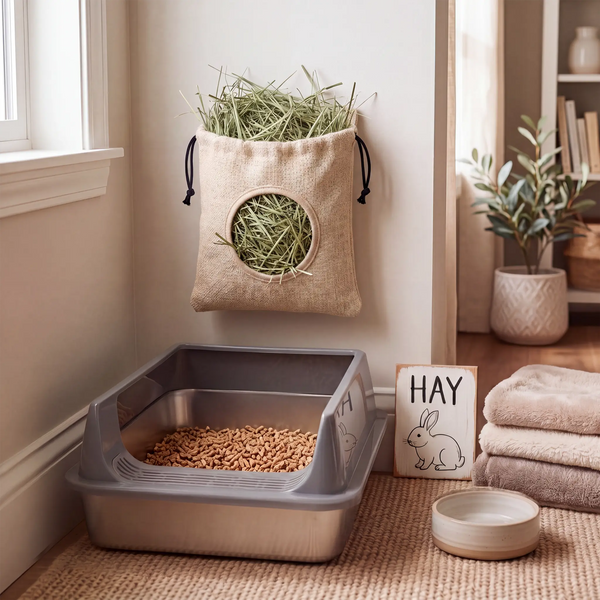
Stainless steel toilet tray, 50×35 cm
Stainless steel doesn't absorb smells the way plastic does. Position it directly under wherever the hay is.
View product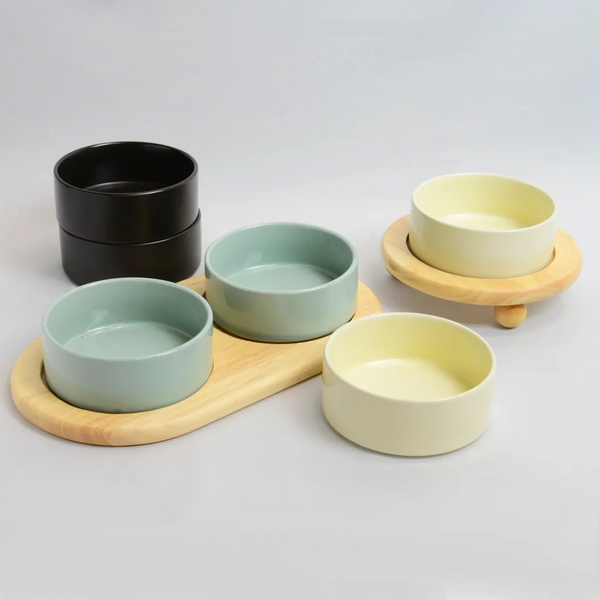
Heavy-base water bowl
Heavy enough that your rabbit can't tip it. Bowl rather than bottle for the natural drinking position.
View product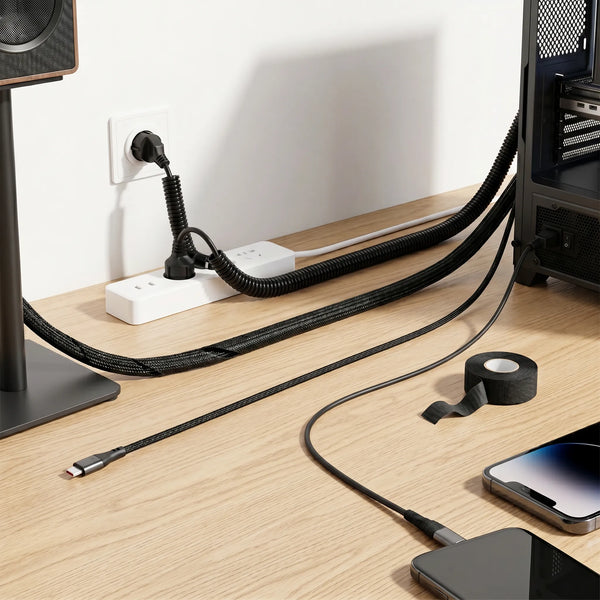
Cable protector set
Cover every accessible cable before your rabbit arrives. Chewed cables are the most common emergency vet call.
View product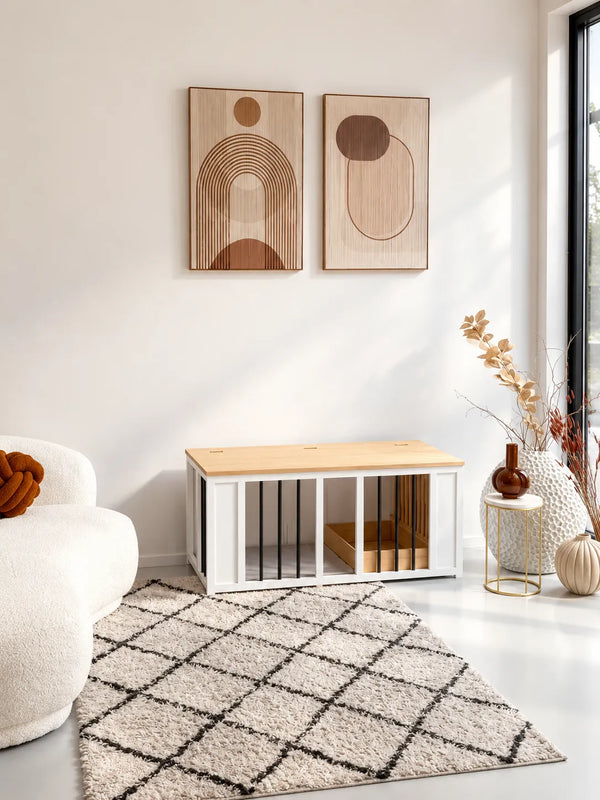
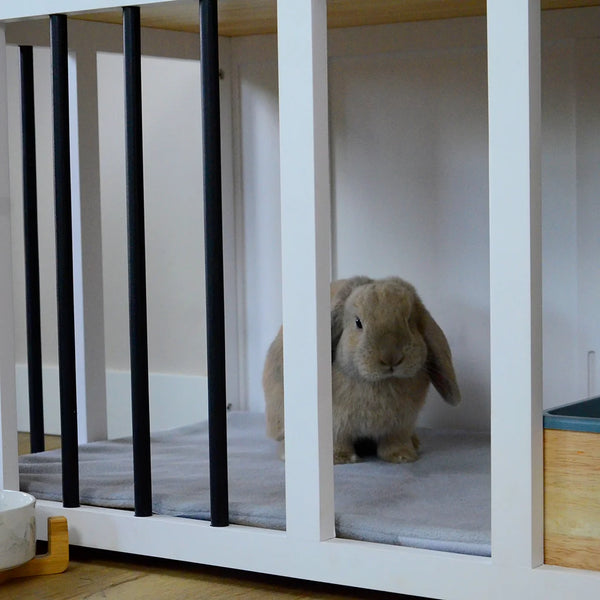
Freeroam Bunny Mansion
An enclosed hide with a built-in hay rack above the litter area, two entrances, furniture-grade finish.
View product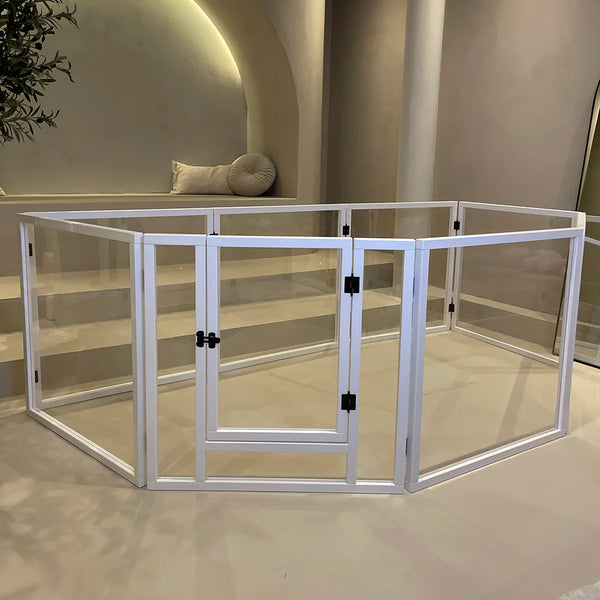
Anti-slip flooring
For laminate, tile or vinyl. Skip this if you have carpet or rugs.
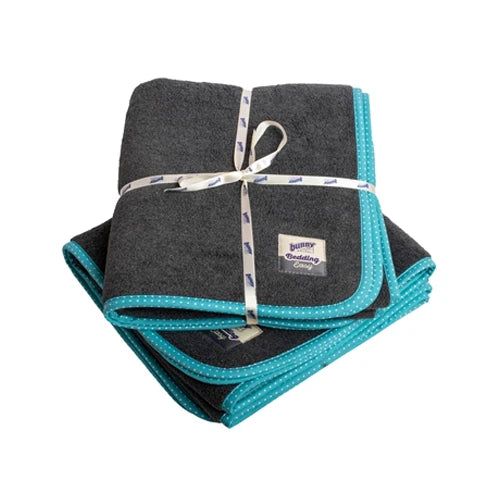
Fleece blanket
For the floor of the home base. Machine-friendly, comfortable resting surface.

Hay, pellets, and fresh leafy greens. Any reputable pet shop will stock the first two; supermarkets will cover the third.
What you can skip, and why
These are products that get marketed heavily to first-time rabbit owners but that we wouldn't put in the basket.
Most products on this skip list are marketed using the language of human comfort: soft, snuggly, treats, exercise. Rabbit needs run on different logic.
Everything you need, in one bundle
If you want to skip the decision-making, this is the bundle we'd buy ourselves. It covers every essential on the list above, in one click, sized for a single adult rabbit in a normal indoor home.
- Freeroam Bunny Mansion (covers 4 of the 7 essentials)
- Stainless steel toilet tray, 50×30 cm
- Heavy-base water bowl
- Playpen panels to define the territory
- Cable protector set (specify length at checkout)
- Anti-slip flooring (optional, for laminate or tile floors)
- Fleece blanket for the Mansion floor

If your situation is a little different
The list above assumes one adult rabbit of average size, living indoors. A few common variations:
Frequently asked questions
Do rabbits need a cage?
Not a traditional pet store cage. But rabbits do need a defined home base with an enclosed retreat.
How much space does an indoor rabbit need?
An enclosed base of at least 1 to 1.2 metres, plus daily access to a larger area.
Is wood safe for rabbits to chew?
Yes, when untreated or sealed with rabbit-safe finishes. Wild rabbits chew bark and wood as part of natural behaviour.
Bowl or bottle for water?
Bowl. Rabbits drink more from bowls because the neck angle is natural.
Can I free-roam my rabbit straight away?
We'd advise against it for the first few weeks. A new rabbit needs to claim a home base first.
Are wire-floor cages bad for rabbits?
Yes. Wire floors cause sore hocks and interfere with cecotrophy.
Want to understand the reasoning? Our housing guide explains why rabbits need what they need, from a prey-animal biology perspective.